Author name: Temitope Kolawole

Self-Development, Uncategorized

Three Simple Ways to Truly Reflect on the Year 2025

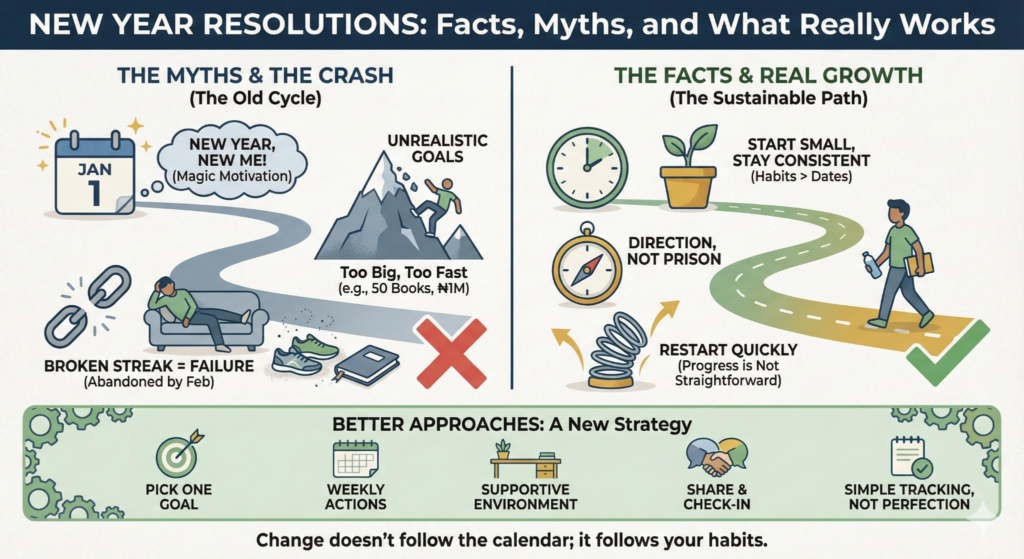
I recently heard a friend say, “One thing I did this year is that I kept going. In the middle of depression, chaos, spiritual warfare, and everything in between. I kept going!” Reflection is how you turn a year of survival into a year of lessons. Truly, the same challenge that frustrated you in March might still be stressing you out in November. Perhaps, it could be simply because you never paused to ask, “Why does this keep happening?” Einstein once said, “The definition of insanity is doing the same thing over and over again and expecting different results.”  On the other hand, you may have made tremendous progress and entirely forgotten the small wins. The times you paid off a small debt, showed up consistently at work even when you did not feel like it, or rebuilt your confidence after a disappointment.  This is where reflection comes in. Without reflection, these moments disappear, and you enter the new year believing you did “nothing.” Reflection makes you stop carrying old patterns blindly. It is how you stop repeating the same argument with the same person about the same thing. It is how you make your progress visible again. And it does not necessarily need a fancy journal or a week-long retreat. Just a few intentional minutes. How do you reflect on 2025 properly, without judging yourself or feeling complacent? Here are three simple, pressure-free ways to make sense of 2025 before you step into 2026. 1. The High / Low / Lesson Snapshot This is one of the quickest ways to understand your year without writing a whole essay. It takes in 3 points: The high, the low, and the lesson.  The High: Those moments where you were proud, relieved, or genuinely yourself. Maybe you were consistent in a routine you usually abandon. Maybe you finally had the courage to apply for something or talk to the love of your life. Maybe you repaired a relationship you thought was gone. The Low: The moment that drained you or forced you to slow down. It could be a financial setback, burnout from work, a rejection, a heartbreak, a project that failed, or a season where you felt lonely. Naming it helps you stop pretending it didn’t happen. Now think about The Lesson. The small piece of wisdom you gained from that low point.At first, you might not find any, but think deeply, stay with it, and you’ll find some. Something practical like, “I need to stop saying yes when I’m exhausted,” or I underestimate how much rest affects my performance,” or “I should have asked for clarity before agreeing to things.” This three-part snapshot gives you a clean, honest summary of your year and what you need to carry forward into the drop in the following year. 2. The Five-Item Wins List Our brains hold on to mistakes, but they quietly skip over progress. This is why you can have a decent year and still feel like you “did nothing.” I’ll recommend a five-item wins list fixes that. Think of five things you completed or improved this year, even if they were small. Here’s an example: These “small wins” tell the true story of your year: steady growth, not sudden breakthroughs. And they template to what you can do better the next year. 3. Write a Guidance Letter to Your January 2025 Self This one helps you hear your own wisdom clearly. Imagine writing to the earlier version of yourself who had no idea what was coming. You’re not giving predictions, you’re sharing guidance you wish you had carried from the start. For example: This letter shows you what the year taught you at a deeper level, not just events, but the mindset that would have made the journey smoother. Summarily, don’t mistake reflection for judging yourself; instead, it’s about paying attention to your life so you don’t repeat what drained you, and so you can build on what strengthened you.  These three simple techniques help you walk into 2026 with more self-awareness, more kindness towards yourself, and a clearer sense of direction. Take whichever one speaks to you and start there. Your year has a lot to tell you. Newsletter Signup for news and special offers! Subscribe Loading… Thank you! You have successfully joined our subscriber list.

Success Tips

5 Study Habits That Build Success Beyond the Classroom

You have probably been there, studied for hours, highlighted every line, and still blanked out when it is time to write in the exam hall. It is frustrating, and sometimes you might ask, “Why is this happening?” Do you need to study more? Or you’re not just cut for books? The truth is, top students are not always the ones who study the longest. They’re the ones who have figured out how to study smarter.  Over time, researchers and high performers have identified habits that boost grades, build focus, and foster confidence and problem-solving skills useful in any career. When I learned this at Obafemi Awolowo University, I started having GPAs of 4.5/5.0 and above, as opposed to my former frustrating 3 points. Here are five study habits that can make a lasting difference. 1. Practice Retrieval, Don’t Just Reread Most of the time, students go over the same notes again and again. You recognise every sentence and think you’ve mastered it. But when it is time to explain the topic, your mind suddenly goes blank. That is because recognition is not the same as recall. Recognition means your brain knows it has seen the information before. Recall means your brain can bring it out without seeing it again. To learn effectively, you need recall. A Purdue University study found that students who tested themselves remembered about 50% more than those who only reread.  After reading a topic, close your notebook and try explaining it aloud, like you’re teaching someone else. You’ll quickly see which parts you truly understand, and your brain will store them better. 2. Use Spaced Repetition Most people cram before exams, thinking it is efficient. My friend, it is not. Information learned that way fades fast because the brain does not get time to rest and rebuild the memory. Spaced repetition works differently; it spreads your study over several days so your brain can review the information again and again at just the right time. For example, if you are preparing for a history exam, read a topic on Monday, review it briefly on Wednesday, and test yourself again next week. Each review strengthens your memory. Apps like Anki or Quizlet make this easier by reminding you when to revisit each topic. 3. Reflect on What Works  Sometimes it is not the subject that is hard, but the method. Reflection simply means thinking about how you learn. Take a few minutes each week to ask questions like, “What helped me focus this week?” or “When did I get distracted?” You might find that you learn faster in the morning or that drawing diagrams helps you understand better. Writing these small lessons down helps you build a study routine that fits you. It is the same thing athletes and successful professionals do when they review what went well and what to improve next time. 4. Connect Learning to Real Life Concepts make more sense when they connect to things you already know. That is why you remember song lyrics or football scores easily; they relate to real experiences. When you connect your schoolwork to daily life, your brain pays more attention. A student learning statistics can track how many goals their team scored in a season. A business student can apply marketing ideas to promote a small online store. A science student can relate experiments to everyday problems, such as clean water and healthy food. Real-world examples make learning natural and memorable. 5. Choose Consistency Over Intensity You might think doing all-night (Overnight) is productive, but it doesn’t help your brain store information properly. Consistency means studying a little every day instead of everything at once. The Pomodoro technique, 25 minutes of study followed by a 5-minute break, helps you stay focused and fresh. Reading one chapter daily or revising for 20 minutes before bed may not seem like much, but over time, it adds up. This steady rhythm builds understanding, confidence, and discipline, which make a real difference not just in school but in work and life. Effective study habits go beyond grades. They help you stay curious, focused, and ready for challenges, skills that will keep shaping your success long after the classroom. Calling It A Wrap Learning is about understanding how your mind works and using it wisely. The more you practice these techniques, the more confident and capable you become in remembering and applying what you learn. If you found this helpful, subscribe to our newsletter to get more practical learning tips, productivity hacks, and success habits that help you grow in Life. Newsletter Signup for news and special offers! Subscribe Loading… Thank you! You have successfully joined our subscriber list.

Scroll to Top