
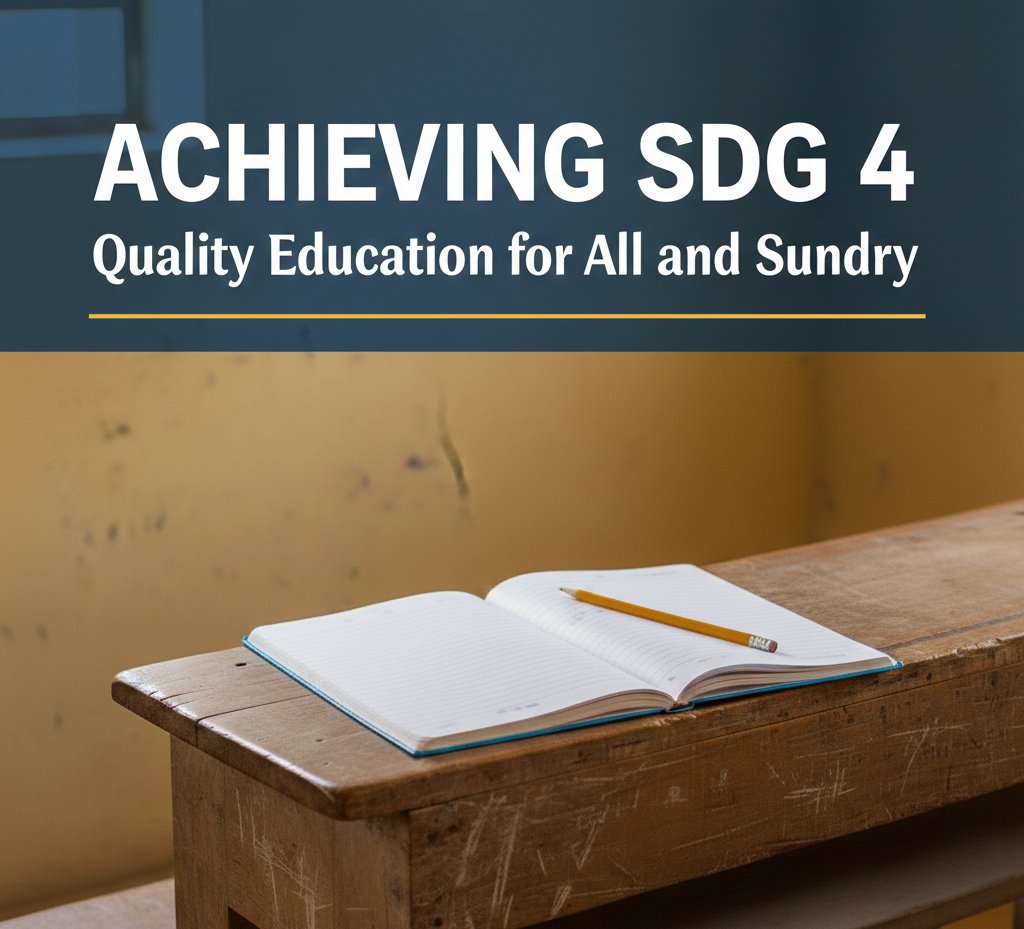
SDG 4 aims to ensure inclusive, equitable, quality education and promote lifelong learning opportunities for all by 2030. With just four years left, how close are we?
Globally, more than 250 million children and young people are out of school. But the challenge goes beyond access. In many cases, schooling does not translate into learning. Children attend school yet leave without basic literacy or numeracy skills.
Using Nigeria as a case study, there are more than 20 million out-of-school children, the highest figure worldwide. For many who are enrolled, classrooms are overcrowded and dilapidated, textbooks are shared, and teachers are stretched thin.
Insecurity, poverty, and weak education funding have continued to disrupt learning, especially in rural and low-income communities.
So, is achieving SDG 4 in Nigeria still possible? Yes, but only with focused, practical action rather than broad promises. Below are six steps that can make real progress possible:
1. Empower teachers
Quality education begins with teachers; however, empowerment goes beyond recruitment. We need to consistently pay teachers’ salaries on time, maintain smaller class sizes, and provide regular training focused on classroom realities, not one-off seminars.
Training should cover modern teaching methods, basic digital tools, and subject mastery. When teachers are supported and held accountable, learning outcomes improve immediately.
2. Fix basic school infrastructure
Many Nigerian schools lack essentials such as desks, functional toilets, electricity, and safe classrooms. Nobody can learn well under these conditions. Government Investment in education should prioritize basic facilities before advanced reforms.
Reliable school buildings, clean water, and simple learning tools create environments where students can concentrate and teachers can teach effectively.
3. Make learning relevant to real life
Most students leave school without skills they can use outside the classroom. Education should develop problem-solving skills, communication skills, and digital literacy, alongside reading and mathematics.
Technical and vocational education should also be strengthened and respected, offering pathways into trades, technology, and small-scale entrepreneurship rather than being treated as a last option.
4. Keep children in school through social support
Poverty remains a major reason children drop out. Programs such as school feeding, transport support, and conditional cash transfers help families keep children in school. For example, the Mimiko Free Mega buses in Ondo State that year helped so many students reduce the burden of transportation.
These interventions are practical, affordable, and proven to increase attendance, especially for girls and children in low-income households.
5. Prioritize inclusion, not just access
Girls, children with disabilities, displaced learners, and those in remote areas face the highest barriers.
Inclusion requires deliberate planning, ramps and assistive learning tools for children with disabilities, flexible school schedules for nomadic communities, and safe learning environments for girls.
Without targeted strategies, “education for all” remains incomplete.
6. Strengthen community responsibility
Schools function better when communities are involved. Parents, traditional leaders, and local organizations can monitor attendance, report teacher absenteeism, and protect school facilities.
When communities see schools as shared assets, dropout rates will fall, and accountability will improve.
Wrapping Up
Achieving SDG 4 in Nigeria depends on focusing resources where they matter most: teachers, basic infrastructure, relevant skills, and inclusive support systems.
Quality education is not an abstract goal; it is a practical investment in the country’s social and economic future.